
Implant-Supported Dentures
in Trophy Club, TX
Losing all or most of your teeth affects more than just your appearance. It impacts your ability to eat nutritious foods, speak clearly, and maintain your facial structure.
Traditional dentures slip when you eat, click when you speak, and require messy adhesives that never quite work as promised. You avoid certain foods, worry about embarrassing moments in social situations, and feel the constant pressure of your dentures against sore gums.
Our restorative dentistry services at Complete Dentistry include implant-supported dentures that combine the coverage of traditional dentures with the stability of dental implants. Dr. David Crumpton handles all phases of implant treatment in-house — from the surgical placement of the implants to the final denture fitting — so you never get handed off between providers. He has completed advanced training at the Pikos Institute and Lamar Dental Implant Training, and brings nearly 30 years of experience placing implants in Trophy Club to every case he takes on.
How Implant-Supported Dentures Differ
Implant-supported dentures attach to dental implants surgically placed in your jawbone rather than relying on suction or adhesive. The implants act as anchors, holding your denture firmly in position. You gain the stability to eat virtually any food without worrying about denture movement. Speaking becomes natural again without the clicks, whistles, or slurred words caused by shifting dentures.
The implants also prevent the bone loss that occurs with traditional dentures. Natural tooth roots stimulate your jawbone through daily chewing and biting. When you lose teeth, that stimulation disappears and your body begins resorbing the unused bone. Traditional dentures rest on top of your gums, providing no stimulation to the bone beneath. The implants supporting your denture transfer chewing forces into your jawbone, maintaining its volume and preventing the facial collapse that makes long-term denture wearers look older than their years.
Types of Implant-Supported Dentures
Removable Overdentures
Removable overdentures snap onto attachments connected to your implants. You remove the denture for cleaning each night, just like traditional dentures. The implants provide significantly more stability than conventional dentures while maintaining the convenience of removal for thorough cleaning. Most patients adapt to removing and replacing their overdenture within days.
The number of implants needed varies by jaw. Lower dentures typically require two to four implants for adequate stability. Upper dentures often need four to six implants because the upper jaw has softer bone and covers a larger area. Dr. Crumpton evaluates your bone quality and quantity, recommending the implant configuration that balances stability with treatment efficiency and cost.
Fixed Implant Bridges
Fixed implant bridges attach permanently to your implants and never come out except during professional maintenance appointments. These restorations look and function most like natural teeth. You brush and floss around them just like you would natural teeth, eliminating the nightly removal routine. The fixed design provides maximum stability and often allows for more natural tooth positioning than removable options.
Fixed bridges require more implants than removable overdentures. Four to six strategically positioned implants can support a full arch of fixed teeth. The specific number depends on the restoration design, your bone quality, and your bite force. Dr. Crumpton plans each case individually, positioning implants to support your restoration optimally while working within your anatomy’s constraints.
The All-on-X Approach
All-on-X places a full arch of replacement teeth on just four to six dental implants. This approach positions implants strategically to maximize bone contact and support, often angling back implants to avoid anatomical structures like sinuses and nerves. The technique frequently allows immediate loading, meaning you receive temporary teeth the same day as implant surgery.
The All-on-X process moves remarkably quickly compared to traditional implant timelines. After comprehensive planning including 3D imaging, Dr. Crumpton places your implants and attaches a temporary denture during the same surgical appointment. You leave with teeth you can use immediately, avoiding the embarrassment of going toothless during healing. The temporary restoration remains in place for several months while your implants integrate with your bone. Once integration completes, we replace the temporary with your final restoration crafted from more durable materials.
The Treatment Process
Treatment begins with thorough evaluation including 3D cone beam imaging. These scans reveal your bone dimensions, density, and the location of nerves, sinuses, and other structures that affect implant placement. Dr. Crumpton uses this information to plan optimal implant positions and determine whether you need bone grafting before implant placement.
If your bone volume proves adequate, implant surgery proceeds under local anesthesia with sedation available for anxious patients. Dr. Crumpton places the predetermined number of implants in carefully planned positions. For removable overdentures, healing abutments attach to the implants and your existing denture receives modification to fit over them temporarily. For fixed restorations or All-on-X, a temporary denture attaches to the implants immediately.
Healing takes three to six months while your bone integrates with the titanium implants. During this period, you wear your temporary restoration and maintain a soft food diet initially, gradually returning to normal foods as healing progresses. Regular monitoring ensures proper healing before we proceed with your final restoration.
Life With Implant-Supported Dentures
Your daily routine changes dramatically with implant support. Eat foods you’ve avoided for years. Bite into apples, chew steak, enjoy corn on the cob without worry. The implants provide stability that makes eating feel natural again. Many patients report regaining weight they lost when traditional dentures made eating difficult or painful.
Speaking improves noticeably. Your denture stays firmly in place, eliminating the slurring and clicking that occurred when traditional dentures moved during speech. Confidence grows as you stop worrying about denture mishaps during conversations, presentations, or social events. The psychological impact of stable teeth often exceeds even the functional improvements.
Maintenance remains straightforward. Removable overdentures come out nightly for cleaning. Brush both the denture and the implant attachments thoroughly. Fixed bridges require meticulous cleaning around the implants using floss threaders or specialized brushes. Regular dental visits every six months allow us to professionally clean around your implants and monitor their health.
Am I a Candidate for Implant Dentures?
Only when we can examine your smile during a consultation will you know for sure if you are a candidate for implant-supported dentures. According to the University of Louisville School of Dentistry, missing teeth or ill-fitting dentures impact 120 million people in the United States. Most adults suffering from tooth loss can receive fixed prosthetics; however, there are instances where preliminary treatments are necessary. Should you require periodontal therapy, bone grafting, or another form of dental care, you can trust our team to assist you in a way promoting optimal support for your new smile. Learn more about All-on-X, another advanced full-arch restoration option.
Comparing Options and Costs
Implant-supported dentures cost more initially than traditional dentures but offer superior value over time. Traditional dentures require periodic relines and eventual replacement as bone loss continues. The multiple sets of dentures needed over decades, combined with ongoing adhesive costs and the time spent managing denture problems, make traditional dentures expensive long-term.
Implant-supported options eliminate these recurring costs. The implants prevent bone loss that necessitates frequent denture adjustments. While the prosthetic portion may need replacement eventually, the implants themselves can last a lifetime with proper care. Most patients find the improved quality of life justifies the higher initial investment. The ability to eat normally, speak clearly, and smile confidently creates value beyond simple cost comparison.
At Complete Dentistry, we work with most PPO dental insurance plans — including Cigna, Humana, Aetna, and BCBS — to maximize your benefits toward implant treatment. For the remaining balance, we offer flexible financing options through CareCredit, Proceed Finance, and Sunbit, including plans with extended low-interest terms. Our team will walk through your coverage and payment options at your consultation so you know exactly what to expect before any treatment begins.
Advanced Implant Care at Complete Dentistry
Dr. Crumpton has proudly served Trophy Club and surrounding communities for nearly 30 years, helping patients transition from struggling with traditional dentures to enjoying the stability of implant support. What sets him apart is that he handles every phase of implant treatment in-house — surgical placement, bone grafting when needed, and final restoration — so your care stays coordinated under one roof from start to finish. His training through the Pikos Institute and Lamar Dental Implant Training programs taught advanced techniques for full arch reconstruction, and he completes two to three times the continuing education required by the state to ensure his methods reflect current best practices.
Don’t continue struggling with dentures that slip, click, and limit your life. Implant-supported dentures offer the stability and confidence you deserve. We accept most PPO dental insurance plans and offer flexible payment options through CareCredit, Proceed Finance, and Sunbit to make implant treatment accessible. Contact us today to schedule your consultation with Dr. Crumpton and take the first step toward a smile that truly works for you.
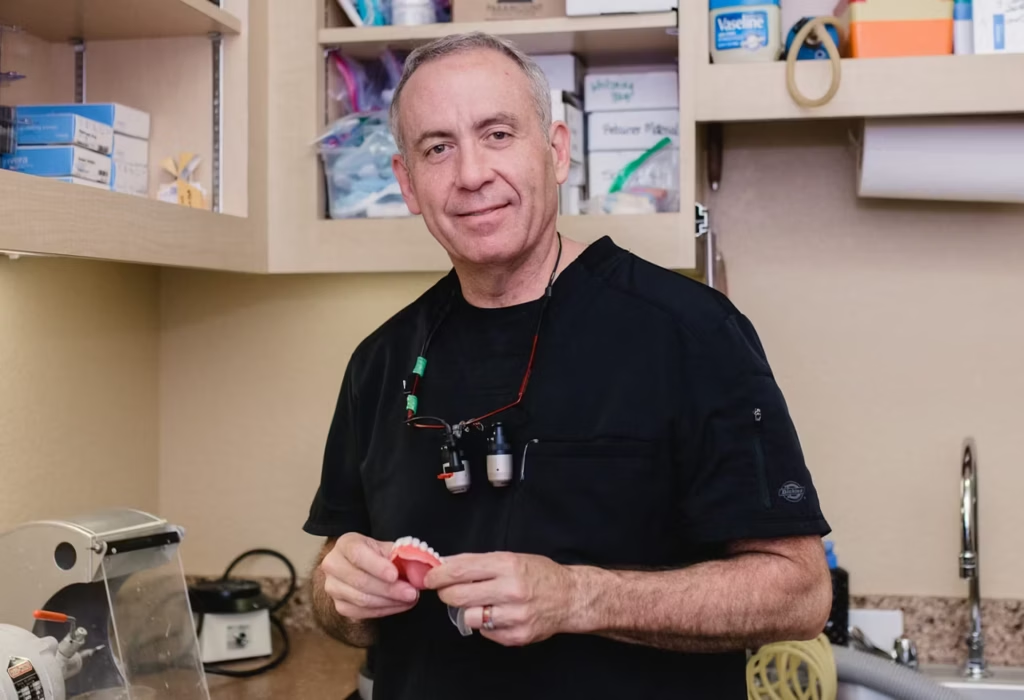
Meet Dr. David Crumpton
Dr. David Crumpton has been one of Trophy Club’s most trusted dentists for nearly three decades. A graduate of Baylor College of Dentistry, Dr. Crumpton is known for his commitment to advanced training, compassionate care, and comprehensive dentistry that covers everything from routine cleanings to full-mouth restorations and dental implants. He is a certified Gold Provider of Invisalign and has trained at nationally recognized institutions, including the Kois Center and the Pikos Institute. His philosophy is simple: listen first, then create a personalized plan that helps each patient achieve the smile they deserve.
Insurance & Financing
We make quality dental care affordable with flexible payment options.
Dental Insurance
We are in-network with many of the most popular PPO dental insurance plans, including Cigna, Humana, United Healthcare, BCBS, and Careington. We also welcome patients with Delta Dental PPO, Aetna, and most other PPO plans — even if we’re not a listed preferred provider. Our office files claims on your behalf and provides a complimentary benefits check before treatment.
Flexible Financing
We offer flexible financing through CareCredit, Proceed Finance, and Sunbit, allowing you to break down treatment costs into manageable monthly payments that fit your budget. We also accept FSA, HSA, cash, check, and all major credit cards.
Questions? Call us at 817-491-3355 to discuss your insurance coverage or financing options.
Visit Complete Dentistry In Trophy Club
We’re located at 301 Trophy Branch Drive, Suite 100, Trophy Club, TX 76262, right off the service road of Highway 114 in the heart of Trophy Club. Dr. David Crumpton has been caring for families throughout Trophy Club, Westlake, Flower Mound, Roanoke, Keller, and Southlake for nearly 30 years.
Ample parking is available. New patients are always welcome, and same-week appointments are often available. You can also book online anytime.
You can find us near The Trophy Table, Leela’s Wine Bar, and HG Sply Co. If you have any trouble locating us, just give us a call and we’ll help you find us.
Contact
- 301 Trophy Branch Drive, Suite 100, Trophy Club, TX 76262
- (817) 491-3355
- Monday–Thursday: 8 AM–5 PM